Kavala Travel Guide, Greece
Destination Description
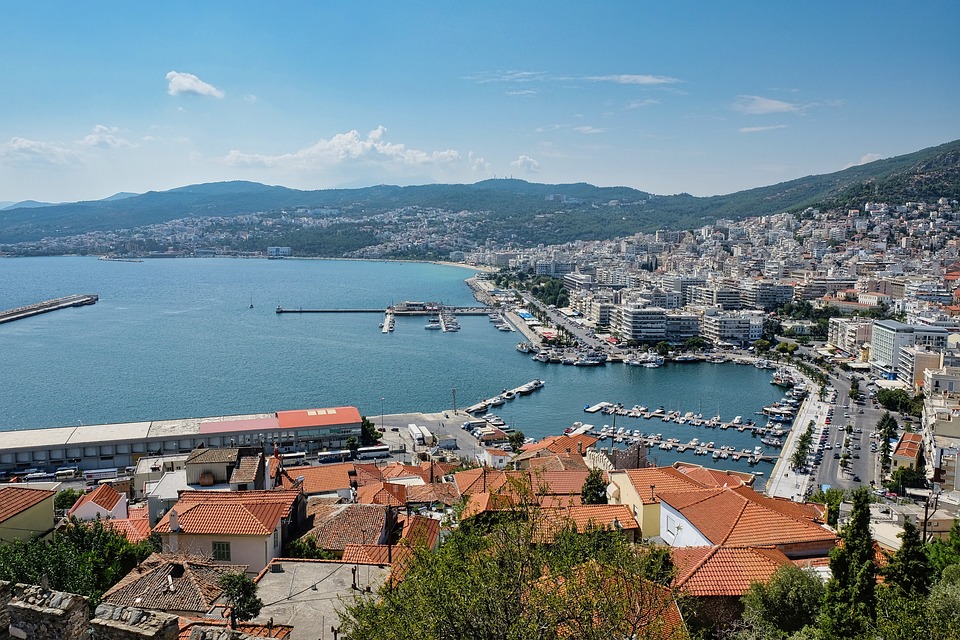
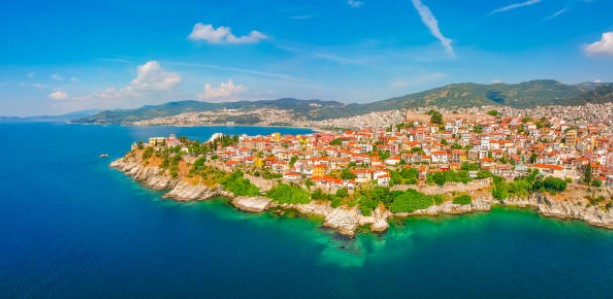
Nestled between the Aegean Sea and the mountains of northern Greece, Kavala is one of the country’s most beautiful coastal cities. Often called the “Blue City” because of its stunning seascapes and crystal-clear waters, Kavala perfectly blends history, culture, and natural beauty. With its vibrant port, Ottoman and Byzantine landmarks, and a relaxed Mediterranean atmosphere, Kavala is an ideal destination for travelers seeking authenticity and charm.
History of Kavala
Kavala’s history stretches back to ancient times, when it was founded as Neapolis (“New City”) in the 7th century BC. It became an important port for the ancient city of Philippi, which was nearby.
During the Roman era, Kavala thrived as a key stop along the Via Egnatia, the great Roman road connecting Rome to Byzantium (modern-day Istanbul). Later, under Byzantine and Ottoman rule, the city continued to grow as a cultural and commercial hub.
Kavala is also famously linked to Saint Paul the Apostle, who arrived here on his first journey to Europe to spread Christianity. Today, his visit is commemorated at the Monument of Saint Paul in the city center.
Top Attractions in Kavala
The Castle of Kavala
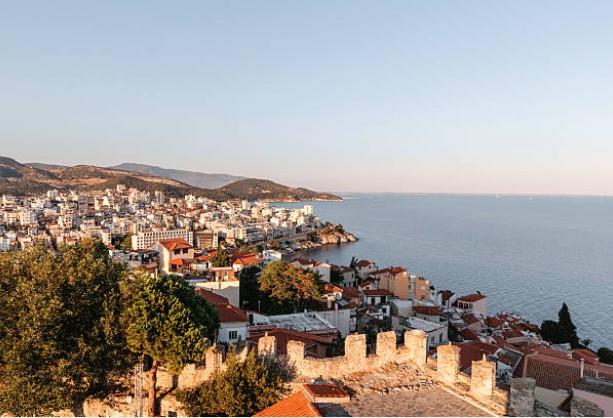
Perched atop the old town, the Kavala Castle (Byzantine Fortress) offers breathtaking panoramic views of the sea and city. Built in the 15th century on ancient and Byzantine foundations, the castle features towers, walls, and a small open-air theater used for summer events.
The Imaret
One of Kavala’s most iconic landmarks, the Imaret is an exquisite Ottoman-era building built in the early 19th century by Muhammad Ali Pasha, the founder of modern Egypt who was born in Kavala. Today, the Imaret has been transformed into a luxury hotel, blending Ottoman architecture with modern elegance.
The Aqueduct (Kamares)
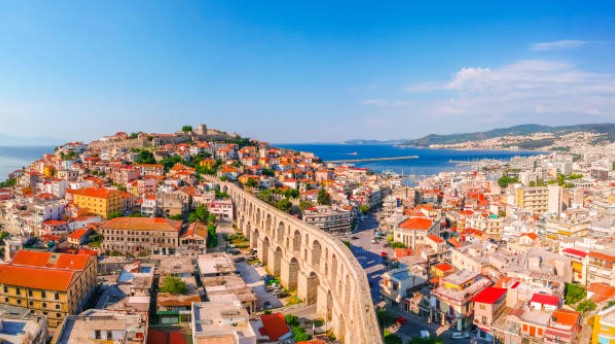
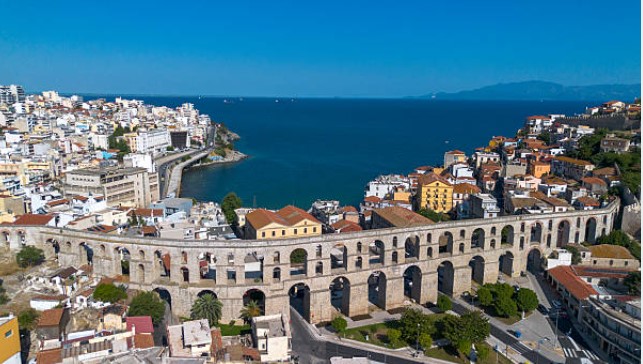
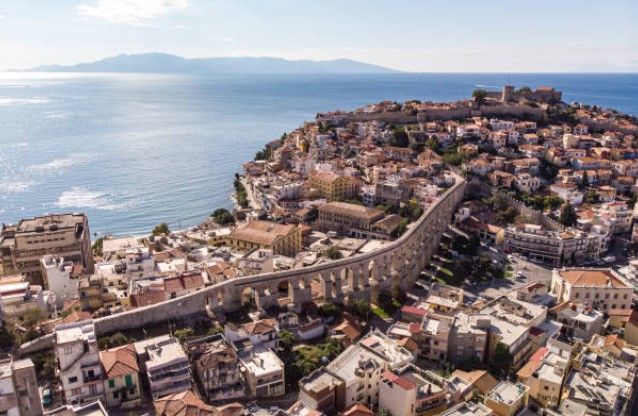
This impressive aqueduct, known as the Kamares, is one of Kavala’s most recognizable features. Built during the 16th century under Ottoman rule, it once supplied water to the city and still dominates the skyline with its elegant arches.
Saint Nicholas Church and Monument of Saint Paul
Located near the harbor, the Church of Saint Nicholas stands where Saint Paul is believed to have landed. The nearby Monument of Saint Paul honors his historic arrival and mission in Europe.
Kavala Beaches
Kavala is blessed with beautiful beaches, such as Rapsani Beach (close to the city), Batis Beach, and Tosca Beach, all offering golden sand, turquoise waters, and great facilities.
The city of Kavala, Greece, is where history meets the sea. From Byzantine castles and Ottoman mosques to charming harbors and sandy beaches, Kavala offers a unique experience filled with beauty and culture.
Must-See & Must-Do
Getting to Kavala
By Air: Kavala International Airport “Megas Alexandros” (KVA) is located about 30 km east of the city and offers flights from Athens and several European cities.
-By Bus: Regular KTEL buses connect Kavala with Thessaloniki (2 hours), Drama, and Athens (8 hours).
-By Car: Easily accessible via the Egnatia Odos Highway (A2), offering scenic views of northern Greece.
-By Ferry: Kavala’s port offers ferry connections to the North Aegean islands, including Thassos, Lesvos, and Samothraki.
Accommodation in Kavala
-Luxury: Imaret Hotel, Lucy Hotel
-Mid-range: Airotel Galaxy, Esperia Hotel
-Budget: Oceanis Hotel, Old Town guesthouses
-Staying in the Old Town (Panagia) gives you stunning views and historical charm, while downtown hotels offer easy access to the harbor and shops.
Food and Drink in Kavala
-Kavala’s cuisine is a delicious mix of Mediterranean and Eastern influences.
-Try local specialties like fresh seafood, grilled octopus, and meze platters.
-Don’t miss Kourabiedes, Kavala’s famous almond cookies covered in powdered sugar.
-Enjoy a coffee or ouzo by the harbor at sunset — a perfect Greek experience.
-For an authentic local meal, visit To Koutoukaki or Apiko.
Climate and Best Time to Visit Kavala
Kavala enjoys a Mediterranean climate with hot, sunny summers and mild winters.
-Best time to visit: May to October
- Summer: Ideal for beach lovers and outdoor exploration.
-Spring and Autumn: Perfect for sightseeing, hiking, and photography with fewer crowds.
Travel Tips
-Explore the Old Town (Panagia District) on foot — its narrow alleys and Ottoman mansions are full of charm.
-Take a day trip to Thassos Island, only 1 hour by ferry.
-Visit the nearby Archaeological Site of Philippi, a UNESCO World Heritage Site.
-Don’t miss the Kavala Tobacco Museum, showcasing the city’s industrial heritage.
Similar Listing
Toulouse Travel Guide

Strasbourg Travel Guide
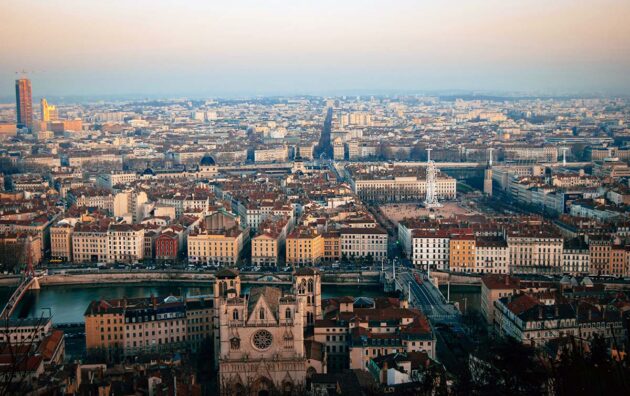
Lyon Travel Guide
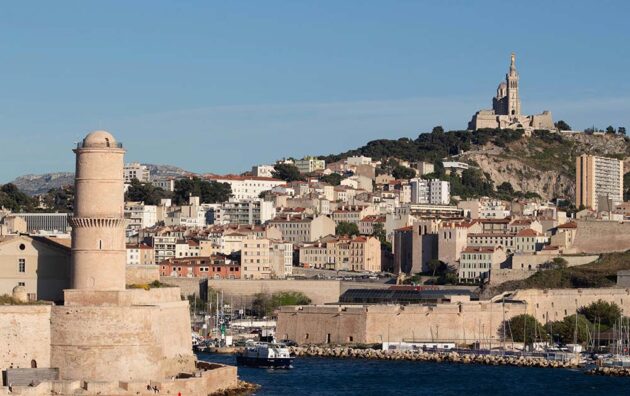
Marseille Travel Guide
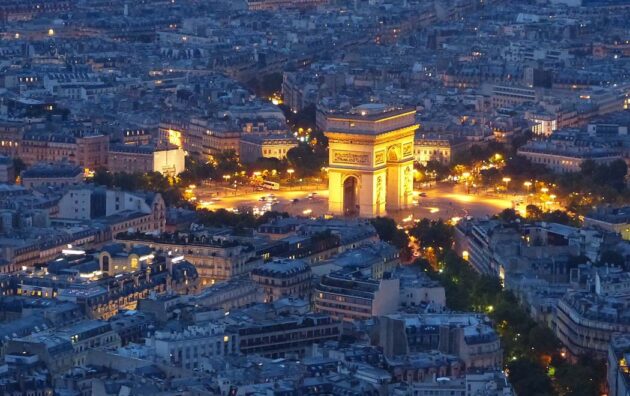
Paris Vacation Guide
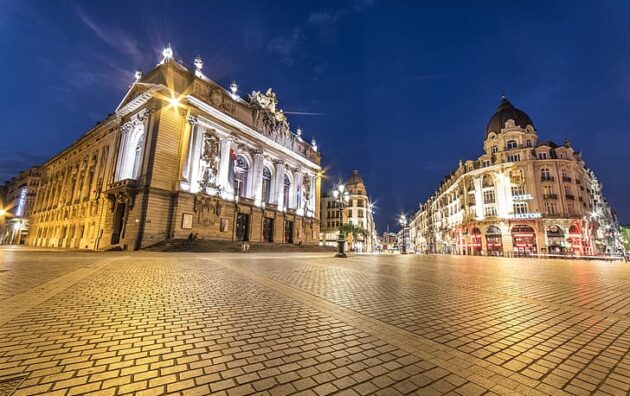
Lille Vacation Guide
France Travel Guide
Seberang Perai Vacation Guide
Malaysia Vacation Guide
Liverpool Travel Guide
Norway Travel Guide
Santo Domingo Travel Guide
Discover the Dominican Republic
Discovering Brno
Exploring Prague
Discovering the Czech Republic
Discovering Venice
Milan Travel Guide